AIMS Lab
Human-Centred AI for Multimodal Sensing
We build human-centered AI that can perceive, understand, adapt to, and act with people in the real world.
We build human-centered AI that can perceive, understand, adapt to, and act with people in the real world.
Note: My previous Twitter/X account (@tingdang513) has been hacked and is no longer accessed.
Please follow my new account: @dang_sally. Ignore any messages or posts from the old account.
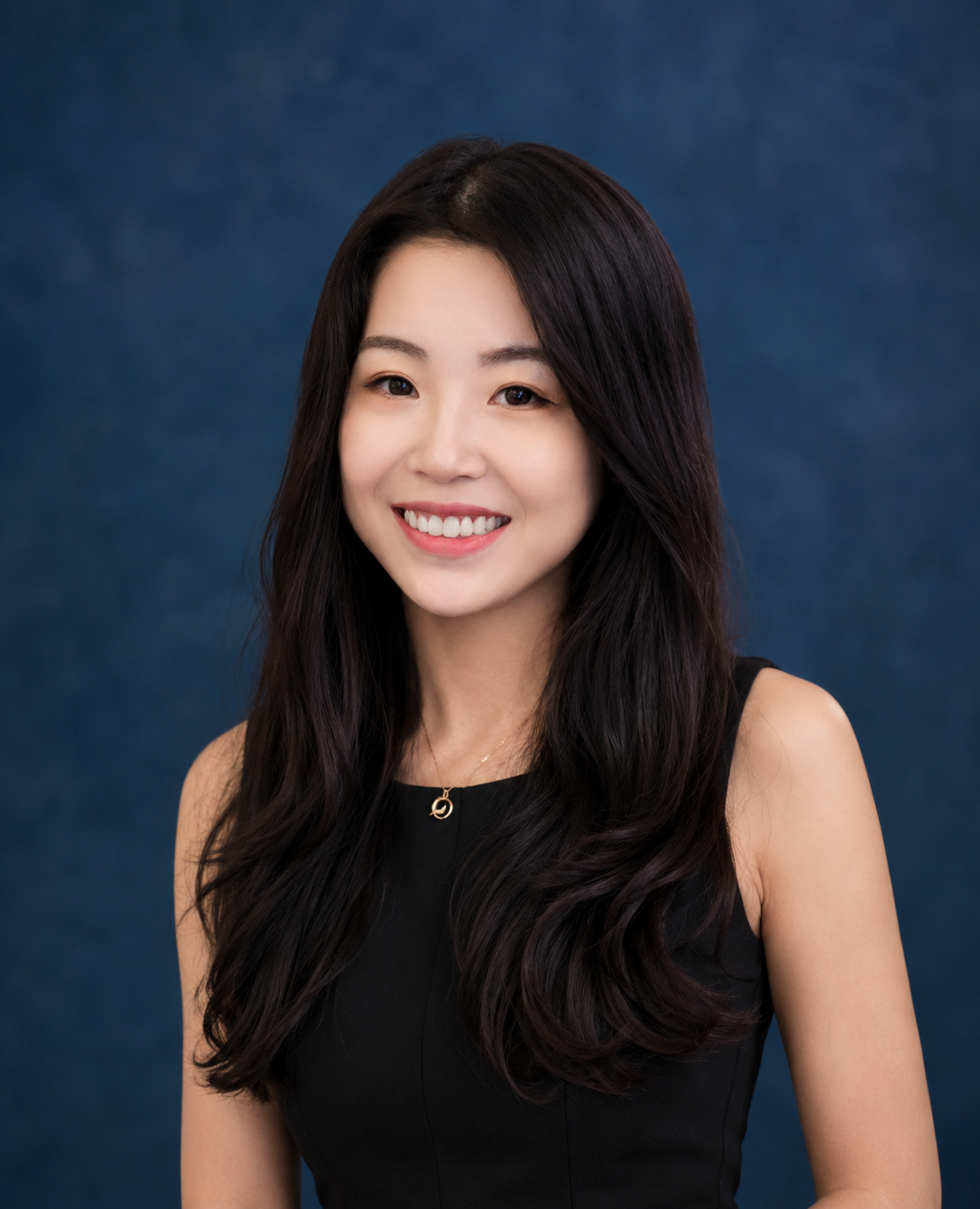
The AIMS Lab (Human-Centred AI for Multimodal Sensing) at the University of Melbourne, led by Dr. Ting Dang, develops human-centered AI that can perceive, understand, adapt to, and act with people in the real world. Real-world human signals, such as speech, sound, and physiology, are noisy, ambiguous, diverse, and context-dependent. Our research asks how AI can understand people from these signals, remain reliable as people and environments change, and ultimately reason with, interact with, and support them. Across this foundation we advance a capability progression: perceive → understand → adapt → act, toward applications in communication, accessibility, and health. We collaborate with clinicians, industry, and interdisciplinary partners to translate these methods into deployable systems.
Ting Dang is a Senior Lecturer at the University of Melbourne. She previously held positions as a Senior Research Scientist at Nokia Bell Labs (UK), a Senior Research Associate at the University of Cambridge, and a Research Associate at the University of New South Wales (UNSW), where she received her Ph.D. She is an elected member of the IEEE Speech and Language Technical Committee (SLTC), an IEEE Senior Member, and an Associate Editor for IEEE Transactions on Affective Computing, Computer Speech and Language, and IEEE Pervasive Computing.
The program is grounded in human-centered AI, speech and audio processing, ubiquitous sensing, multimodal AI, and digital health. Together, these pillars target impact in health and wellbeing, communication and accessibility, and safety-critical environments.
2026/09: One paper titled "RAIL: Rethinking Auditory Intelligence in Large Audio-Language Models with a CHC-Grounded Benchmark" accepted by NeurIPS 2026 Evaluations and Datasets Track.
2026/08: One paper titled "Why Can't They Remember? Uncovering Representation and Retrieval Bottlenecks in Multi-Turn Acoustic Memory" accepted by EMNLP 2026.
2026/08: Nominated and elected as a committee member of the IEEE Speech and Language Technical Committee (SLTC).
2026/06: Sixteen papers accepted at INTERSPEECH 2026.
2026/05: One paper titled "CoCoEmo: Composable and Controllable Human-Like Emotional TTS via Activation Steering" accepted by ICML 2026.
2026/04: One paper titled "X-FEMR: A Token-level Explainable Approach for Electronic Health Records Foundation Models using Transformer" accepted by IJCAI 2026.
2026/04: Elevated to Senior Member, IEEE.
2026/04: One paper titled "Adapting Where It Matters: Depth-Aware Adaptation for Efficient Multilingual Speech Recognition in Low-Resource Languages" accepted by ACL Findings 2026.
2026/03: Awarded fund for "AI LEARN: Artificial Intelligence Centre for the Empowerment of Human Learning".
2026/03: One paper titled "Multi-Scale Diffusion for Bio-topological Representation Learning on Multimodal Brain Graphs" accepted by ACM Transactions on Intelligent Systems and Technology.
2026/01: Five papers accepted at ICASSP 2026.
2025/11: Call for Papers: "Post-Training of Speech Foundation Models" and "Child Home Interaction & Language Dynamics: Speech, Psychology, Affect, Computation & Environments " at INTERSPEECH 2026 Special Sessions.
2025/11: Awarded Google Fund for "Benchmarking Auditory Cognitive Reasoning in Audio-Language Models".
2025/11: Joined Editorial Board of IEEE Transactions on Affective Computing.
2025/09: Two papers and two workshop papers accepted at NeurIPS 2025.
2025/09: One paper accepted by SenSys 2026, titled 'From Cheap to Chic: Enhancing Music Playback Quality of Budget Earphones via Hardware-Aware Learning'.
2025/09: One paper accepted by¡ IEEE Transactions on Affective Computing, titled 'How many raters do we need? Analyses of uncertainty in estimating ambiguity-aware emotion labels'.
2025/09: One paper accepted by ACM Transactions on Computing for Healthcare, titled 'Data-Efficient Psychiatric Disorder Detection via Self-supervised Learning on Frequency-enhanced Brain Networks'.
2025/08: Shortlisted as the Finalist for the Rising Star (Academics) STEM Women in Color Award 2025.
2025/07: Senior PC of AAAI 2026.
2025/07: Two papers accepted at UbiComp/ISWC 2025 workshops.
2025/06: Call for papers: ESPRESSO: Special Session on Scalable and Efficient Signal Processing for Multimodal AI Systems at APSIPA ASC 2025.
2025/05: Two papers accepted at INTERSPEECH 2025.
2025/04: Joined the Editorial Board of Computer Speech and Language.
2025/03: Two US patents are granted.
2024/12: Two papers are accepted by IEEE ICASSP 2025.
2024/11: One paper titled 'Multimodal Large Language Models in Human-centered Health: Practical Insights' is accepted by IEEE Pervasive Computing.
2024/10: Served as the Area Chair for ICASSP 2024.
2024/09:One paper titled 'TinyTTA: Efficient Test-time Adaptation via Early-exit Ensembles on Edge Devices' is accepted by NeurIPS 2024.
2024/07: One paper titled 'StatioCL: Contrastive Learning for Time Series via Non-Stationary and Temporal Contrast' is accepted by CIKM 2024.
2024/05: Joined the Editorial Board of IEEE Pervasive Computing.